
Law Restricting Hula Performances, 1859.
Cover Image: Masthead of Ka Hae Hawaii published on June 15, 1859.
Newspapers were used to inform the people of what the legislature discussed while in session, and which bills become law. One of the bills considered in 1859 was one requiring a license issued by the Minister of the Interior in order to put on a hula show. The original bill proposed allowing hula performances in Honolulu and Lahaina, like all other performances. The law that passed however restricts hula performances to Honolulu only.
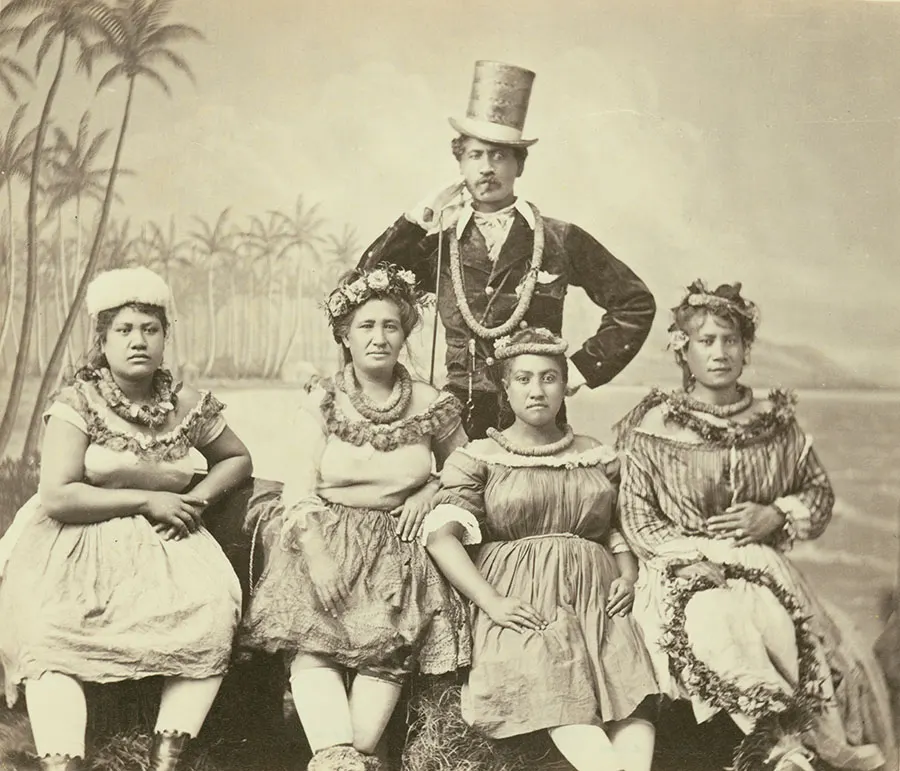
Image: Ioane Ukeke and hula troupe. Ioane Ukeke standing in back. Women seated left to right: Sister of Ioane Ukeke’s wife, wife of Ioane Ukeke, Anne Kapule, Mary Kapule. Photo by M. Dickson, ca. 1880. Bishop Museum Archives. SP 76818
Image sharing on social media is welcome. For all other uses please contact Archives@BishopMuseum.org
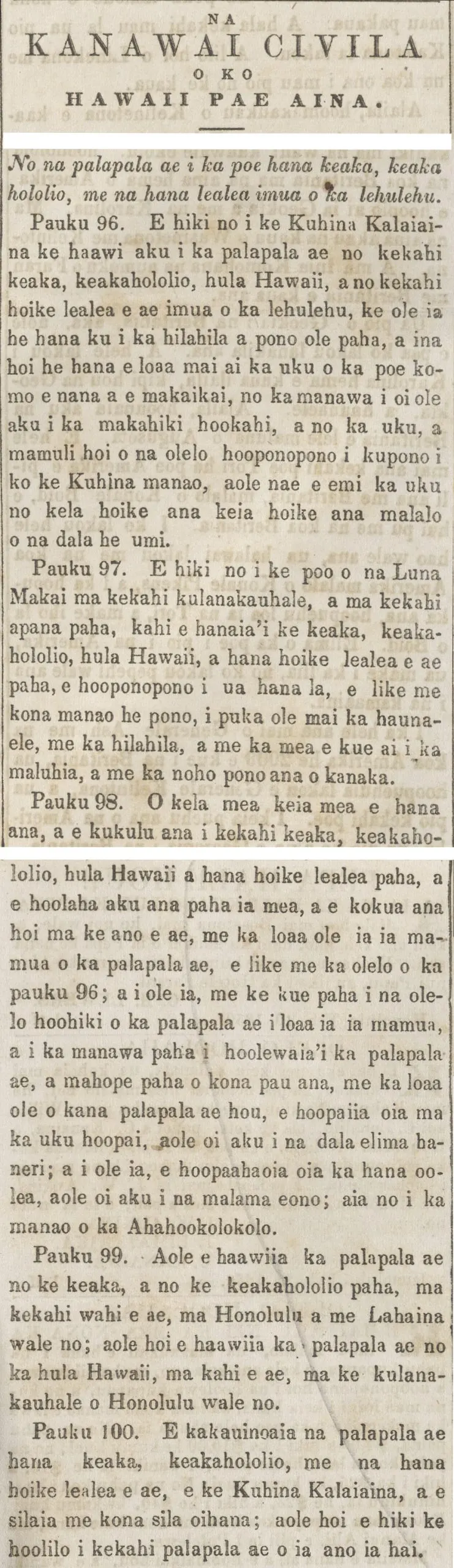
Image: “Na Kanawai Civila o ko Hawaii Pae Aina.” Ka Hae Hawaii, June 15, 1859, pp. 42–43.
The Civil Laws of the Hawaiian Islands
* * * * * * * * * * *
TO THEATERS, CIRCUSES, AND PUBLIC SHOWS.
Section 96. The Minister of Interior may license any theater, circus, Hawaiian hula, public show, or other exhibition, not of an immoral character, to which admission is obtainable by the payment of money, for such time, not exceeding one year, and upon such terms and conditions as he shall think reasonable: provided, however, that not less than ten dollars shall be required for each performance licensed.
Section 97. The Chief of Police in any town or district where any theater, circus, Hawaiian hula, or other public show shall be exhibited, may regulate the same in such manner as he shall think necessary for the preservation of order, decorum, and the public peace or morals.
Section 98. Any person who shall set up or promote any such theater, circus,
* * ** * * * * * * * *
Hawaiian hula, show or exhibition, or shall publish or advertise the same, or otherwise aid or assist therein, without a license first obtained, as provided in section 96, or contrary to the terms and conditions of such license, or while the same is suspended, or after the same shall have expired, without obtaining a new license, shall be fined a sum not exceeding five hundred dollars, or imprisoned at hard labor not exceeding six months, in the discretion of the Court.
Section 99. No license for a Hawaiian hula shall be granted for any other place than Honolulu, and no license for any theater, circus, or other public show or exhibition, shall be granted for any other place than Honolulu or Lahaina.
Section 100. Every license for a theater, circus, Hawaiian hula, or other public show or exhibition, shall be signed by the Minister of the Interior, and impressed with the seal of his department, and no such license shall be transferable.
This post is part of He Aupuni Palapala: Preserving and Digitizing the Hawaiian Language Newspapers, a partnership between Bishop Museum and Awaiaulu with assistance from Kamehameha Schools. Mahalo nui loa to Hawaii Tourism Authority for their support. Learn more about this project here.
More from Ka Hae Hawaii
See all →
Abbreviations
How do you save space, time, and money? One way the Hawaiian language newspapers accomplished this was by using abbreviations.
News from correspondents afar.
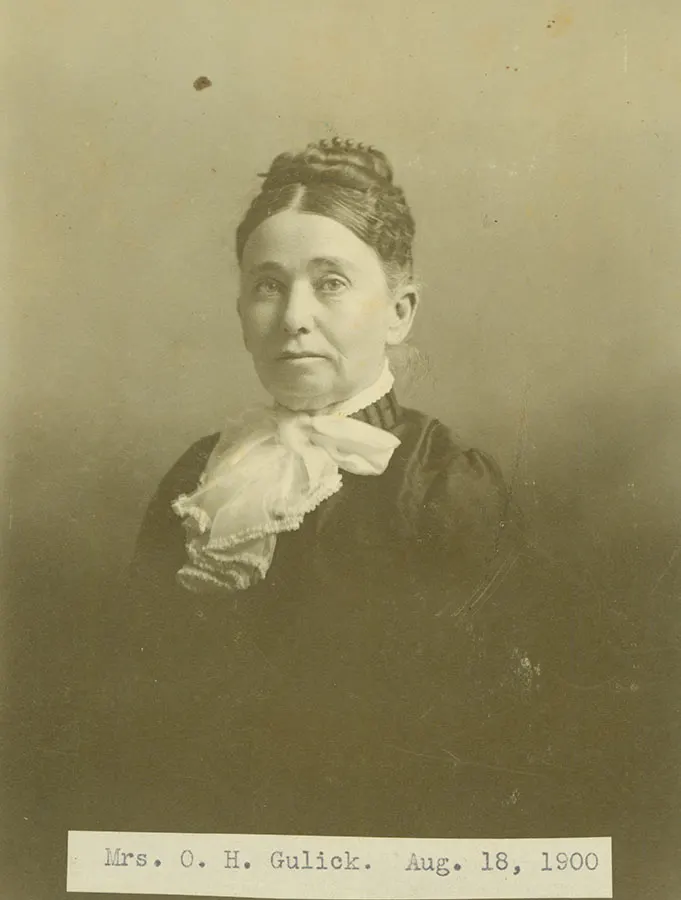
Orramel Hinckley Gulick, or Oramela (Oremela) H. Kulika, as he was known in Hawaiian, was the publisher of the Alaula, a newspaper1 intended to educate children. He is ordained in 1862 and in 1870 was assigned by the American Board to teach in Japan. He leaves Hawaiʻi with his wife Ann Eliza (Clark) on June 23, 1870 aboard the Ekake (Ajax). He writes to his Alaula and the Kuokoa of his impressions along the way.
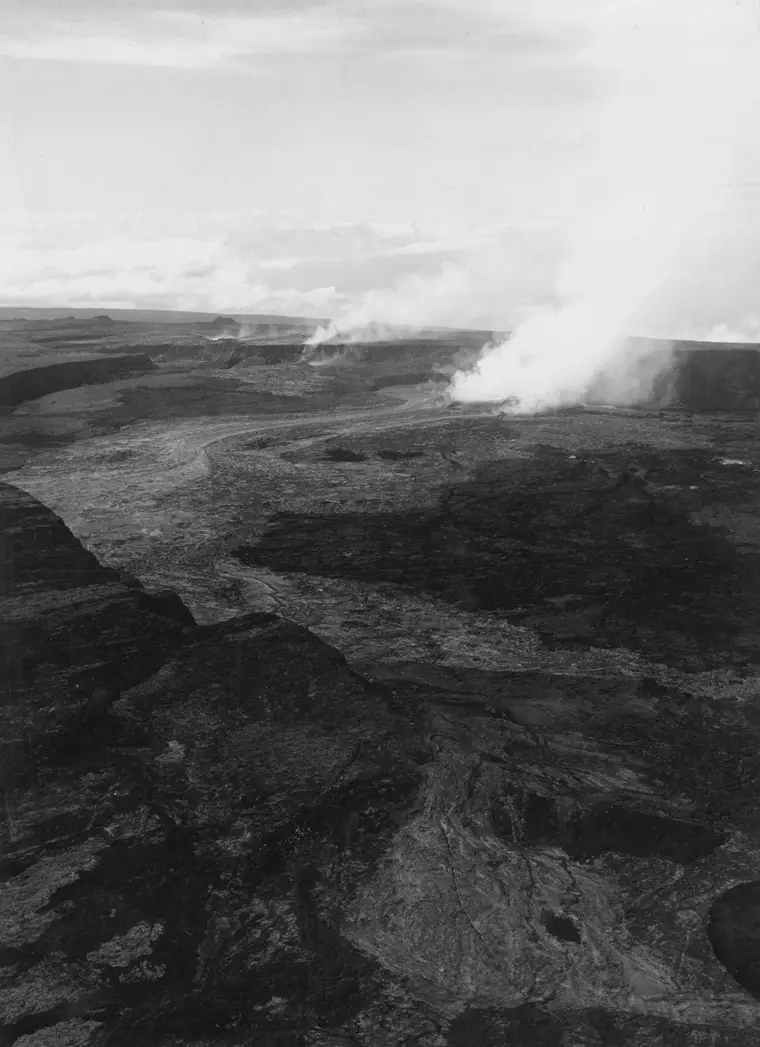
The 1859 Eruption of Mauna Loa.
J.H. Kaakua wrote his account of the Mauna Loa eruption in an article titled, “No ka Pele,” on the front page of Ka Hae Hawaii, November 11, 1859.
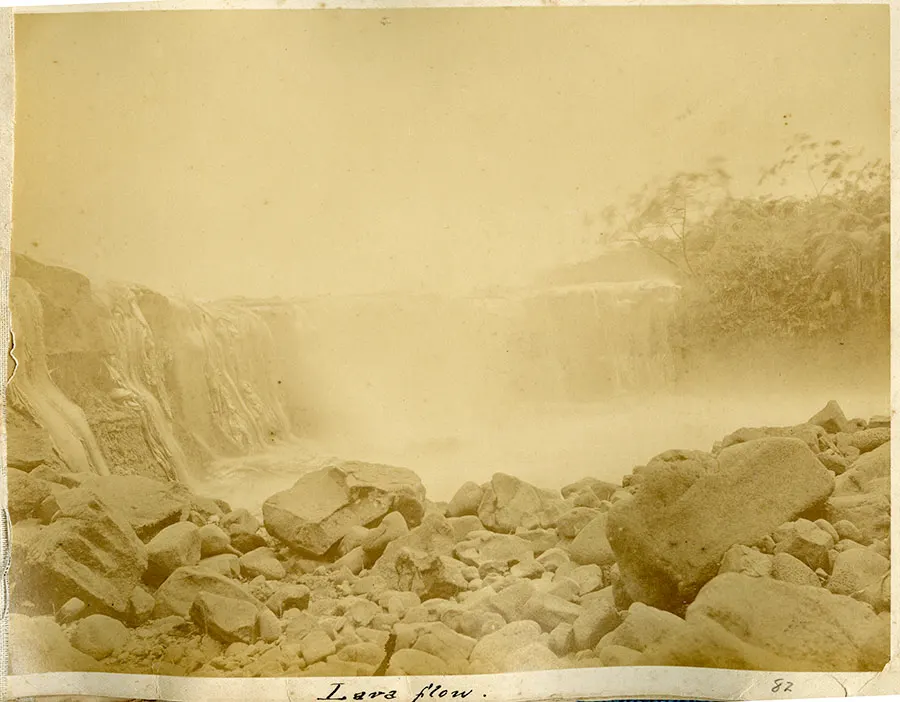
Mokuʻāweoweo Lava Flow 170 Years Ago Today.
Pele’s activities these past months have been awesome. 170 years ago, an eruption began lasting over a year. It had Hilo people worried. The story is taken from a larger article first describing an eruption dating back to about 1789 when Keōua and his warriors were making their way from Hilo to Kaʻū and a great number perished due to the scorching sands and poisonous gas.