Lā Kūʻokoʻa in the Territory of Hawaiʻi
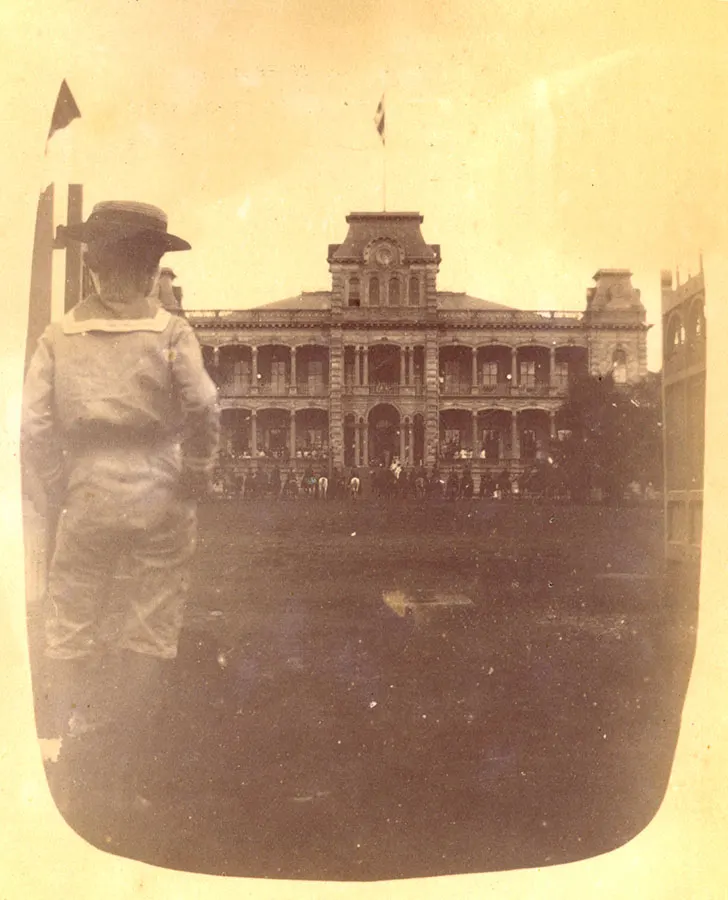
After more than half a century as a national holiday, a 1903 bill removed Lā Kūʻokoʻa’s official status as a holiday recognized by Hawaiʻi’s government.
Bishop Museum Library & ArchivesNūhou Mondays · a new story every week283 stories since 2021
Stories from the Hawaiian language newspapers, 1834–1948 — read, translated, and shared by the staff preserving and digitizing them.
This week
After more than half a century as a national holiday, a 1903 bill removed Lā Kūʻokoʻa’s official status as a holiday recognized by Hawaiʻi’s government.
Recently
S. K. Ka-ne gives a speech before His Majesty King David Kalākaua in celebration of His 54th birthday.
The title above is the opening of the famous words by Kamehameha III cloaked in kake, reassuring Kalama that she had nothing to fear by meeting him in his royal residence of Kahaleuluhe.
Election time is upon us once again. While we still see sign waving and posters hung in shop windows and on the next-door neighbor’s fence, campaign mele have all but disappeared.
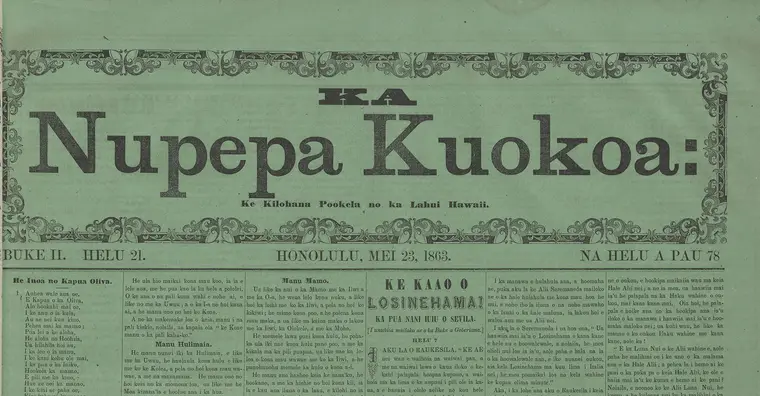
The answer to the riddle above is the Kuokoa of May 23, 1863.
The newspaper business was difficult enough without having to worry about people following the basic rules for submissions to be published.
Robert William Kalanihiapo Wilcox (Wilikoki) was enrolled in the Royal Military Academy in Turin, Italy, as one of the youths sent abroad by Kalākaua to be educated in faraway lands, so that they may return and bring what they learned back home to serve their nation. This is the first part of Wilikoki’s account of his travels in Rome, a place he calls Ke Kūlanakauhale Kamahaʻo (The Wondrous City).
How do you save space, time, and money? One way the Hawaiian language newspapers accomplished this was by using abbreviations.
The Hoku Ao leaves Honolulu for Micronesia on July 5, 1876 carrying aboard: Rev. Edward Bailey, representative of the Hawaiian Board; J. W. Kanoa & wife for Butaritari; Pilipo for the Gilbertese Islands; and John Smith who was returning to Wellington Island.
Davida Kaluhi Beka [David Kaluhi Baker] (1863–1927) translates Aesop Romance, a fictional account of the life of Aesop. “He Wahi Moolelo Pokole no Esopa,” runs in Ko Hawaii Pae Aina from August 27 to October 29, 1881. Baker also translates and submits fables as well.
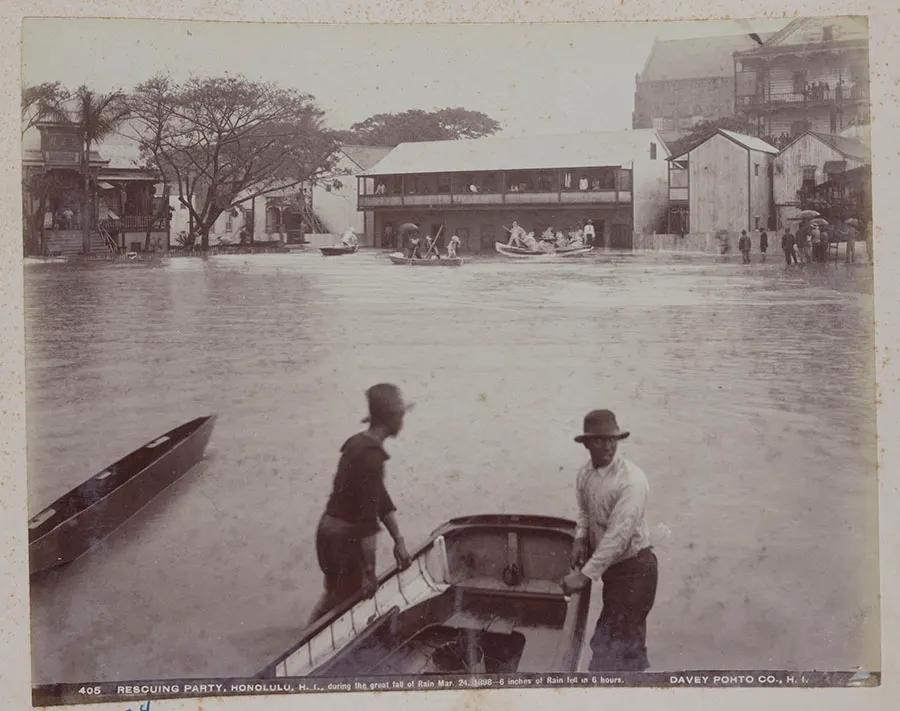
We have been having a lot of bad weather lately. We, however unlike Hawaiʻi in 1918, have the Central Pacific Hurricane Center to keep us forewarned. Be prepared, and watch out for your family, friends, and neighbors.
It has been a year since we first talked about photographer H. L. Chase. Looking through the English newspapers also yield information not found in Hawaiian, and likewise the Hawaiian newspapers often speak of things that the English do not. Meanwhile, if possible, we should not forget the other language papers.
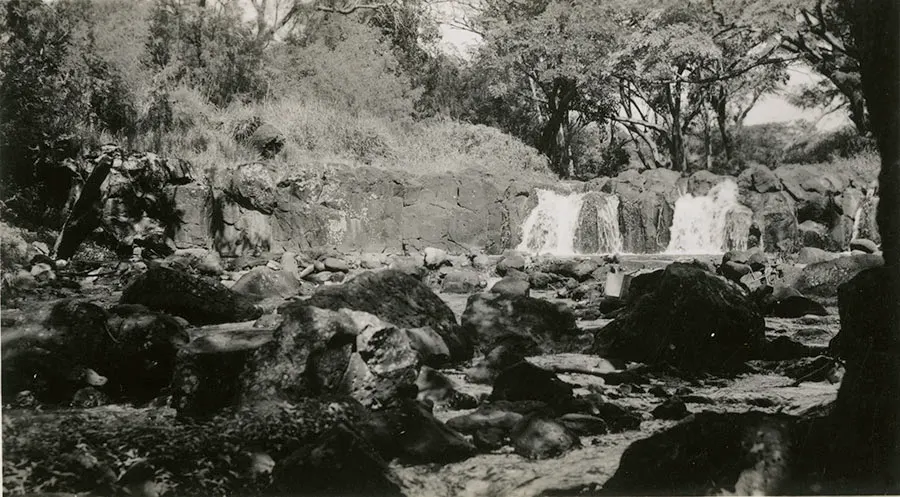
Have you visited Waikahalulu Falls and the park surrounding it? Did you wonder why it is called Liliʻuokalani Park?
The project
He Aupuni Palapala: Preserving and Digitizing the Hawaiian Language Newspapers is a multi-year collaboration between Bishop Museum and Awaiaulu to find, conserve, and re-image every known Hawaiian language newspaper so the pages are clear, complete, and word-searchable for everyone.
About the projectWhat is Nūhou Mondays?