
Jonah Kūhiō Kalanianaʻole, Hawaiian Homes, and the mele “Kalamaʻula”
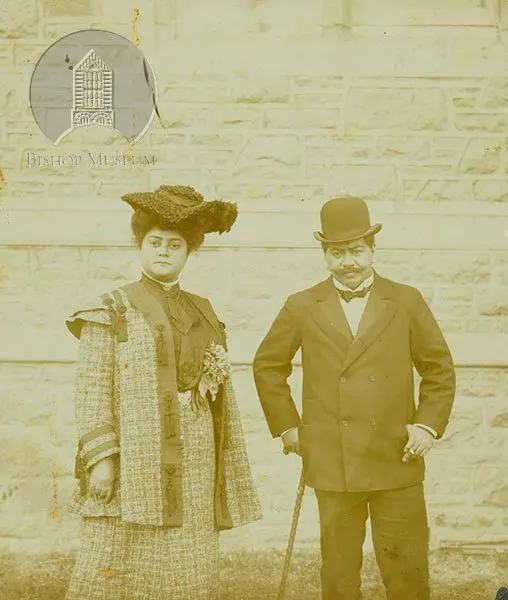
Image: Prince Jonah Kūhiō Kalanianaʻole and Princess Elizabeth Kahanu Kalanianaʻole at the Louisiana Purchase Exhibition; St. Louis, Missouri. 1903. Bishop Museum Archives. SP 120894.
Image sharing on social media is welcome. For all other uses please contact Archives@BishopMuseum.org
Aloha Nūhou Monday!
Dear Reader, this is the 100th anniversary of the passing of the Hawaiian Homes Commission Act, championed by Jonah Kūhiō Kalanianaʻole. There are accordingly many posts commemorating this achievement. It was commemorated back in the day in song as well, and today I find myself humming to the tune of one of them, the mele “Kalamaʻula,” which is still popular today.
(Mele translation by Mary Kawena Pukui, MS Grp 81, Box 4.16)
Kalamaʻula
Kalamaʻula
A he sure maoli nō
It is indeed a fact,
Me ke onaona
A fragrant one too,
Me ka nani o Kalamaʻula.
This beauty of Kalamaʻula.
Ke kapa ʻia nei,
It is being named,
He uʻi mai hoʻi kau,
This wondrous beauty,
Me ka nani o Kalamaʻula.
This beauty, Kalamaʻula.
ʻĀina ua kaulana,
A land made famous,
I ka hoʻopulapula,
By rehabilitation,
Me ka nani o Kalamaʻula.
This beauty, Kalamaʻula.
E hoʻi kāua,
Let us go,
E noho i ka ʻāina,
And live on this land,
Me ka nani o Kalamaʻula.
On this beauty, Kalamaʻula.
Kalamaʻula on Molokaʻi was the first lands developed for Hawaiian homesteads. Among the first group of settlers were Emma Kala Dudoit and her husband Marcellus Dudoit along with their seven children. She is today credited with this composition lauding the beauty of this ʻāina hoʻopulapula (lands for rehabilitation), which Hawaiian homestead lands were known as.
This feeling is echoed in this political advertisement. George W. Maioho places the lyrics of “Kalamaʻula” prominently next to his portrait, proudly announcing that he is a son of Molokaʻi.
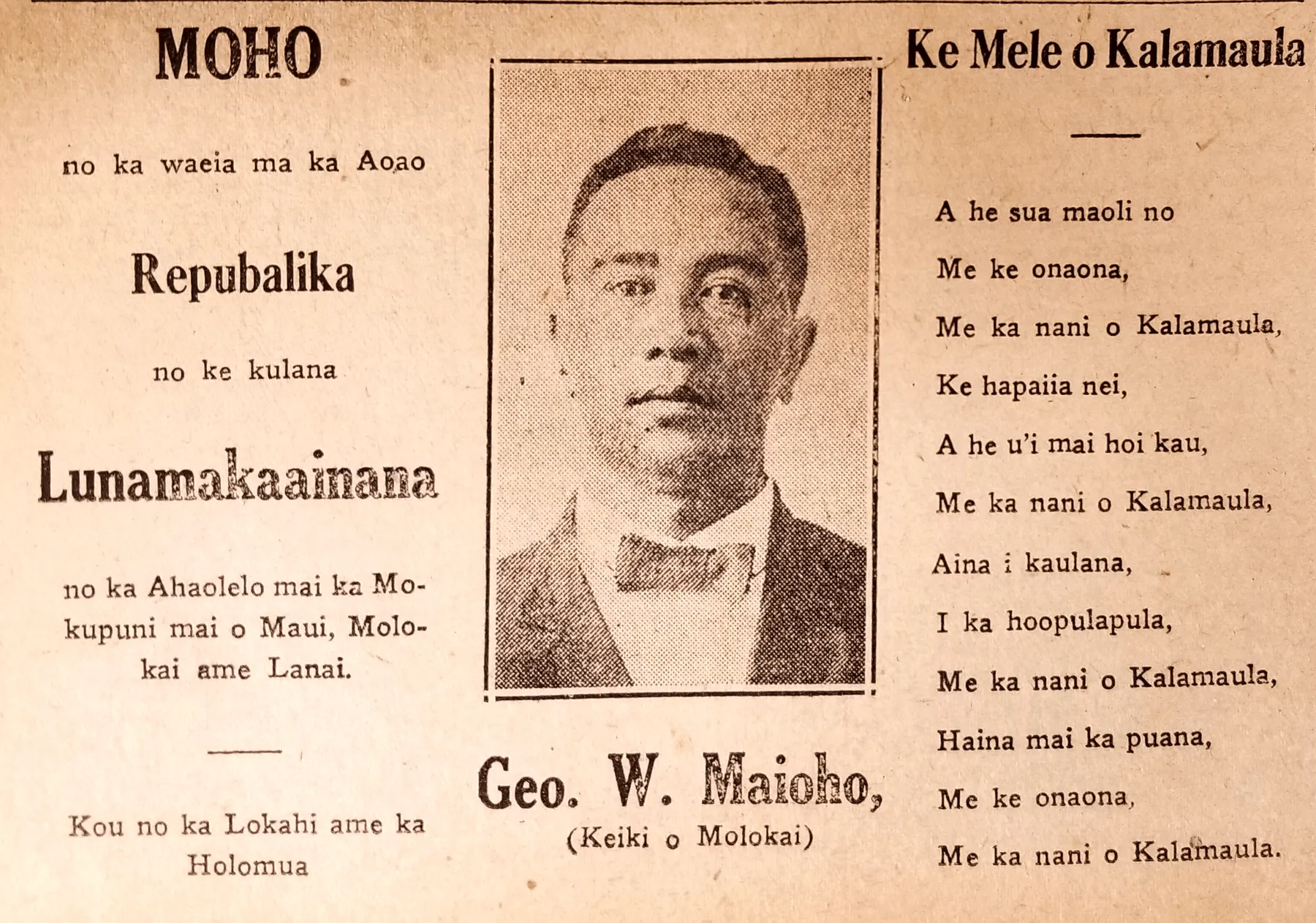
Image: Political advertisement for George W. Maioho, one of the first homesteaders at Kalamaʻula, Molokaʻi, published in Ka Nupepa Kuokoa, September 4, 1924, p. 2.
The advertisement reads:
CANDIDATE
to be selected for the
Republican Party
for the position of Representative
for the House from the islands of Maui, Molokai and Lanai.
______
Yours for Unity and Progress
George W. Maioho
(Son of Molokai)
(Ka Nupepa Kuokoa, September 4, 1924, p. 2)
George Wellington Maioho was also selected to be in the first group of settlers given a homestead in Kalamaʻula, and he was described as:
A youth who lived for a long time with W. H. Rice [William Hyde Rice], and his suitability is known. He has a Hawaiian wife [Mildred Kekulanani Bertelmann], and they have four children from their loins. He has done all sorts of work, and has aloha for living in the country. Those who have aloha for the soil, they are not believed to be people who will turn back after they receive their own land. (“Ka Moolelo o ka Poe i Waeia,” Ka Nupepa Kuokoa, July 6, 1922, p. 2)
—Post by Bishop Museum Library & Archives Staff
More from Ka Nupepa Kuokoa
See all →
Descriptions of Travels, Near and Far
From the first Hawaiian language newspaper, Ka Lama Hawaii, until the very last, Ka Hoku o Hawaii, there were published countless accounts of travels around these islands as well as to foreign lands across the sea.
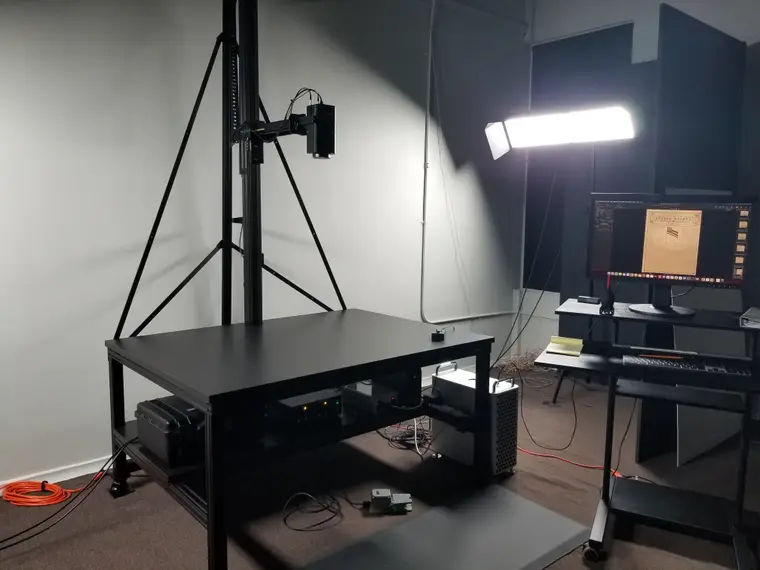
Digitizing Preparations Now Underway
The much awaited set up and calibration of our new Digital Transitions Titan machine is complete and we received initial training early September!
Names and Connections and Sometimes Photos
These days there is a lot of genealogical information online—some can only be accessed for a fee, while a few sources are available at no cost. The Hawaiian language newspapers can be freely searched online.
Hamilton Library Excursions
We spent the last couple of months in Hamilton Library at University of Hawaiʻi at Mānoa. We were welcomed by Kapena Shim, Hawaiian Collection Librarian, to catalog the condition of each page of their Hawaiian language newspapers.