
Timeless Advice
Cover Image: Masthead of Ka Hoku o Hawaii published on May 3, 1917.
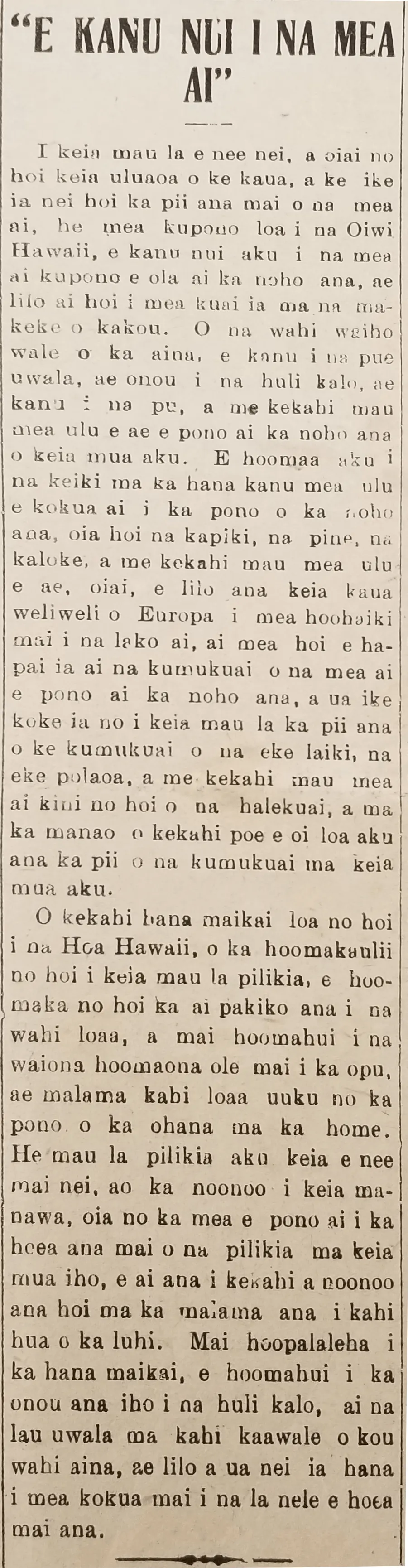
Image: “E Kanu Nui i na Mea Ai,” Ka Hoku o Hawaii, May 3, 1917, p. 2. This article and those found in the previous 11 years of this newspaper are not currently available online.
Aloha Nūhou Monday!
Dear Reader, the Hawaiian language newspapers would often give advice to the lāhui. The newspapers would discuss topics that were important at the time. When this article in Ka Hoku o Hawaii was printed during World War I, Hawaiians were aware of the how this distant war might touch their lives. The advice, given over a hundred years ago, is no less important for us today.
“DO MUCH PLANTING OF FOOD”
These days, being there is confusion caused by the war, we see the cost of food rising; it is imperative that Hawaiians do much planting of foods that will allow them to survive, and that can be sold in our markets. In places that land is just left unused, plant sweet potato mounds, and stick in taro tops, and plant squash, and other foods that will benefit our livelihood from here forth. Get your children used to planting plants to help our lives, like cabbage, beans, carrots, and other things, for this frightening war in Europe will restrict the food supply and increase the prices of foods we need to live; and soon we will see a rise in the price of bags of rice, bags of flour, and some canned foods at the market; some people believe that in the future, prices will increase much more.
One very good thing Hawaiians can do is to be frugal during these difficult days, and begin to eat sparingly of what there is available, and do not mimic in drinking alcohol which does not satiate the stomach; but care for what little you have for the good of your family at home. There are difficult days on the way, and thinking now is what will benefit you when difficulties arise in the future; consume a portion but save a portion of the fruits of your labor. Do not neglect good work; follow up in planting taro tops and sweet potato leaves in the open space on your land, and that work will help you in the days of need that are coming.
(Ka Hoku o Hawaii, May 5, 1917, p. 2)
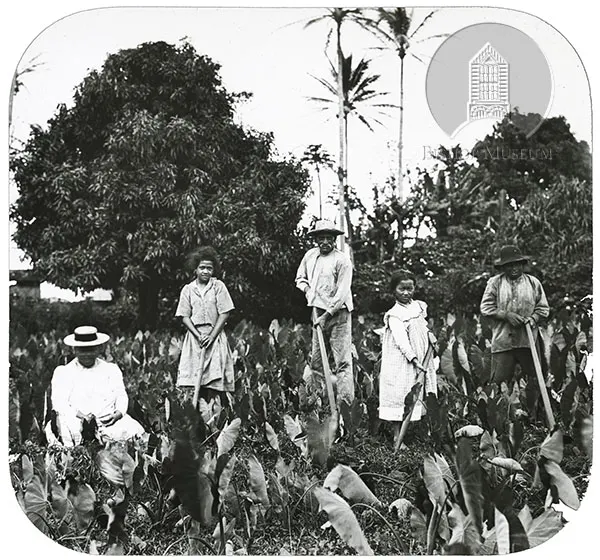
Image:Hawaiian family working in loʻi kalo (taro patch), Waiākea, Hawaiʻi. Photo by Henshaw (?), 1890–1905. Bishop Museum Archives. SLS 2053.
Image sharing on social media is welcome. For all other uses please contact Archives@BishopMuseum.org
The Hawaiian language newspapers are full of articles dealing with plants and traditions related to them. This reminded me of a classic publication from Bishop Museum Press which drew from many of these articles, Native Hawaiian Planters In Old Hawaii: Their Life, Lore, & Environment, by E. S. Craighill Handy, Elizabeth Green Handy, and Mary Kawena Pukui. I notice that new print copies are not available, but you can still get it in ebook form! Click here for more information.
Let’s seek out practices old and new that will lead to greater self-sufficiency for Hawaiʻi. And as the article instructed, we need to teach our children to become more self-sufficient as well.
—Post by Bishop Museum Library & Archives Staff
More from Ka Hoku o Hawaii
See all →
New Team Members
We are excited to announce that we have brought on two new members to our team! ʻIolani Ulii is from Papakōlea and Kapaiaʻalaopuna Earle from Mānoa.
Welo Hou, New Exhibit at Bishop Museum
There is a new exhibit in Bishop Museum’s Picture Gallery. It features the Helen Roberts Collection of mele which were collected across the archipelago in the early 1920s from people who still retained them.
Hamilton Library Excursions
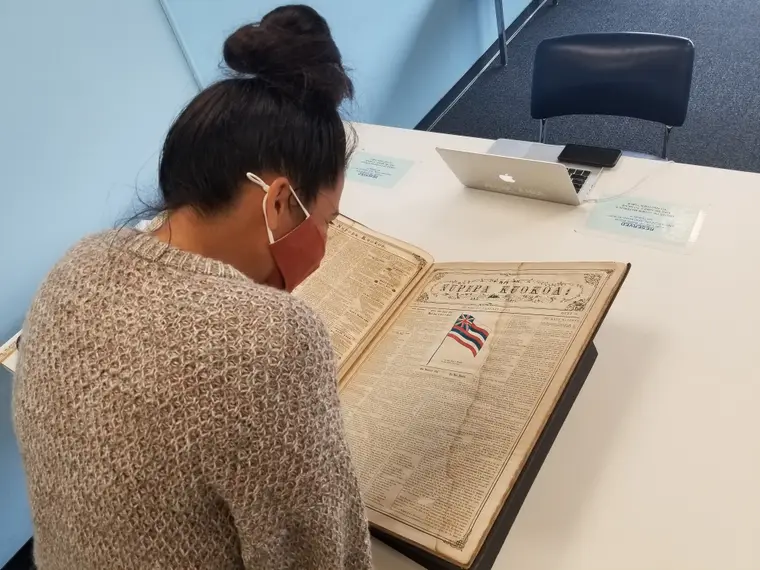
We spent the last couple of months in Hamilton Library at University of Hawaiʻi at Mānoa. We were welcomed by Kapena Shim, Hawaiian Collection Librarian, to catalog the condition of each page of their Hawaiian language newspapers.
Introducing Nūhou Mondays
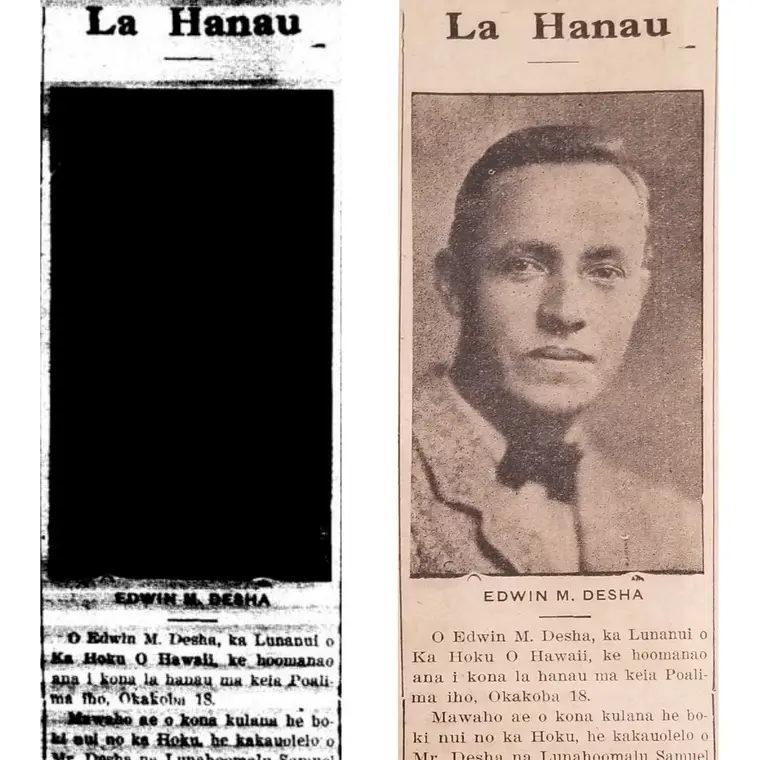
Nūhou Mondays will be a place where we talk about the project He Aupuni Palapala: Preserving and Digitizing the Hawaiian Language Newspapers.