
Woodcut images to grow interest: Ka Hae Hawaii, 1856–1861.
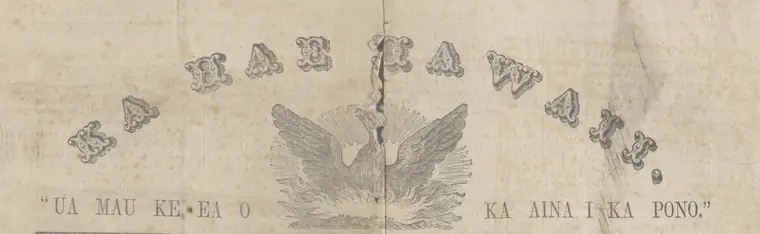
Cover Image: Masthead of Ka Hae Hawaii published on August 5, 1857.
Aloha Nūhou Monday!
In an earlier post we spoke of the first Hawaiian language newspaper, Ka Lama Hawaii (1834) and the introduction of foreign animals to its readers using text along with woodcuts engraved by Dr. Alonzo Chapin. Some twenty years later, Ka Hae Hawaii (1856–1861), published by the Department of Public Instruction, continues to use woodcut prints when introducing modern farming machinery to grow interest in its readers. These woodcuts have a higher level of detail not seen in Chapin’s animals. Many are signed and appear to have been engraved outside of Hawaiʻi.
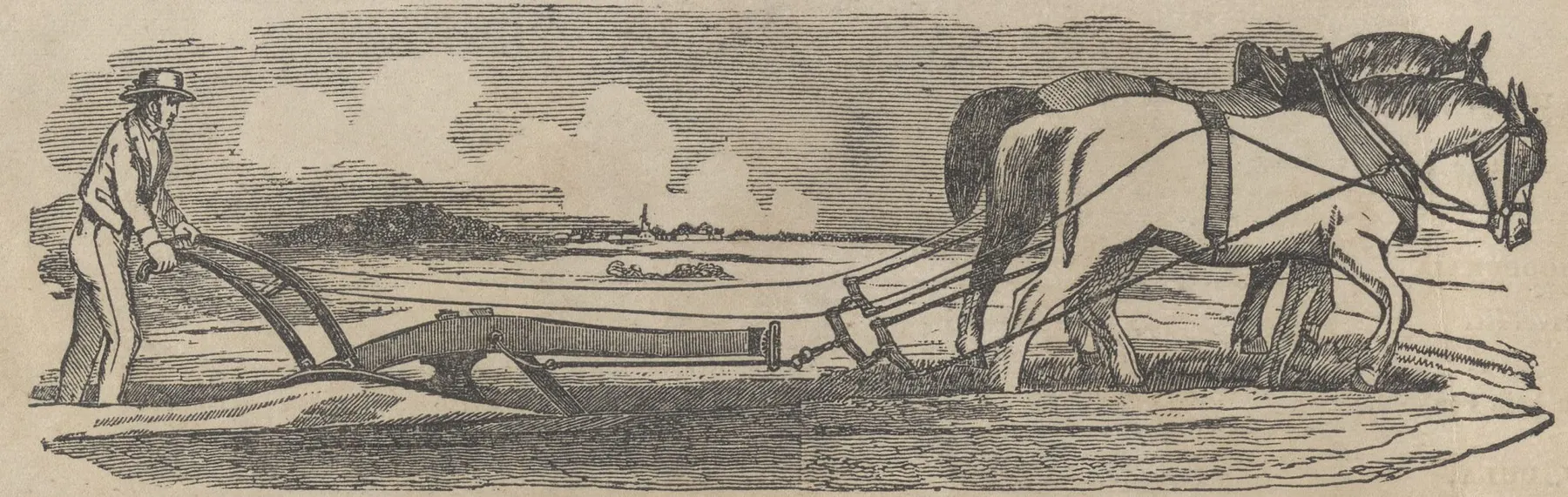
Image: “No ka Oo-palau.” Ka Hae Hawaii, September 30, 1857, p. 106.
ʻŌʻō Palau (Plow)
This type of ʻōʻō, according to the writer is only used by enlightened people. It is found in the United States and Europe. These days you can even see some haole and Hawaiians here in Hawaiʻi using it. If you have 20 men with ʻōʻō digging and softening an acre of land, it will take them a day. Whereas if you have one smart haole with his plow, he can plow an acre in one day.
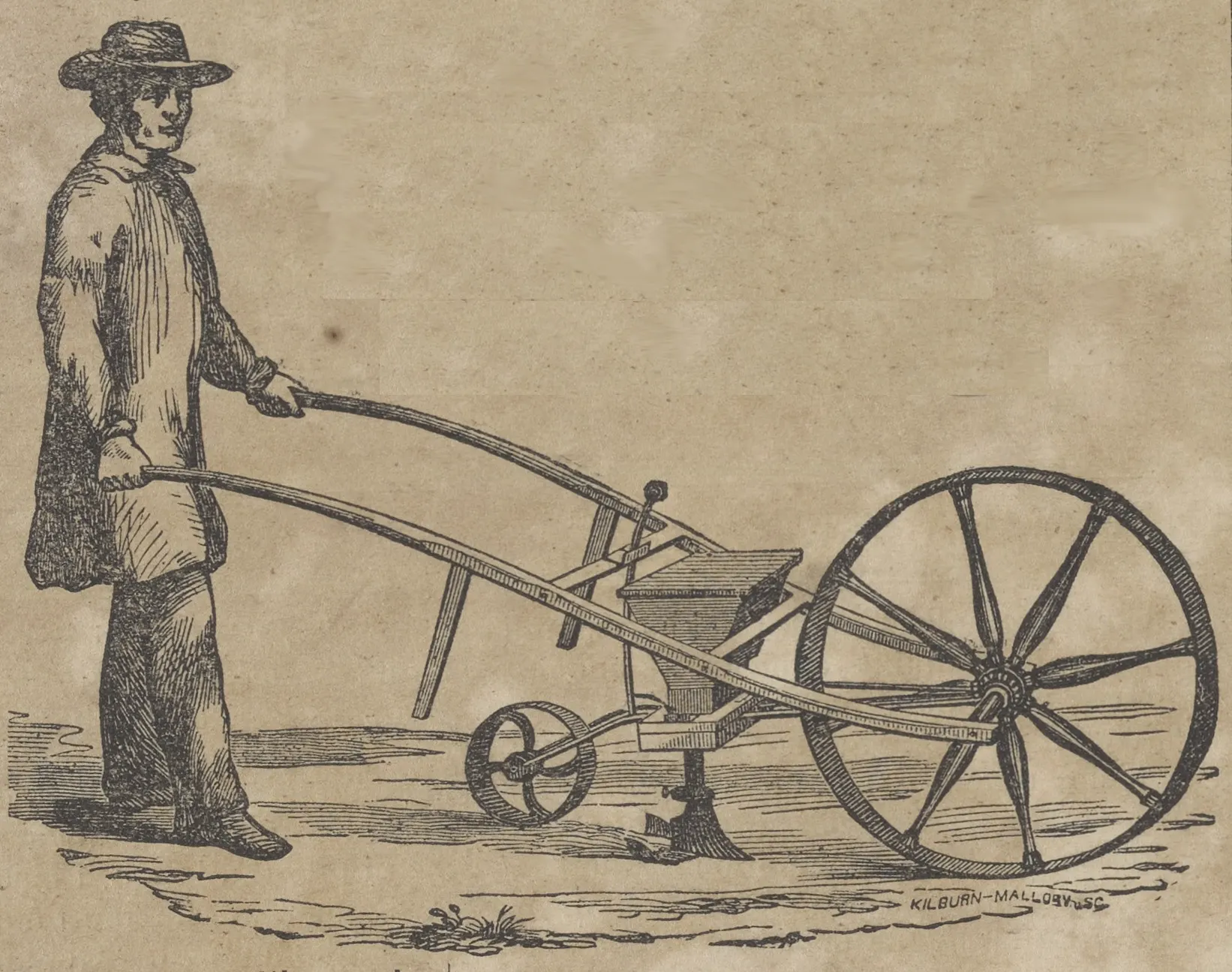
Image: “Ua pau ka aina i ka palau ia…” Ka Hae Hawaii, October 14, 1857, p. 114.
Mea Kanu Hua (Seed Drill)
Whether a farmer wanted to plant his seeds, large ones (like beans), or tiny ones (like carrots), in rows or in mounds, this is what he needed for increased efficiency.
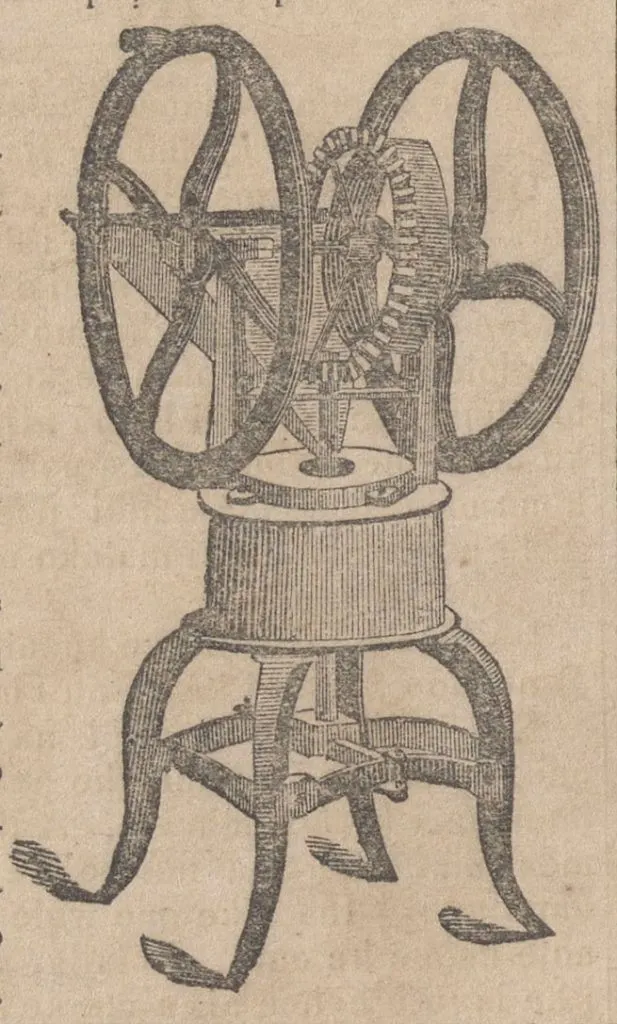
Image: “No ka Wili Ohi-ili-Kofe.” Ka Hae Hawaii, September 23, 1857, p. 102.
Wili ʻOhi ʻIli Kofe (Coffee Pulping Mill)
With the increased interest in the farming of coffee, there needed to be a practical means to process the coffee cherries. According to the article accompanying this illustration, the farmer would be able to pulp 50 pounds of coffee per hour using this mill.
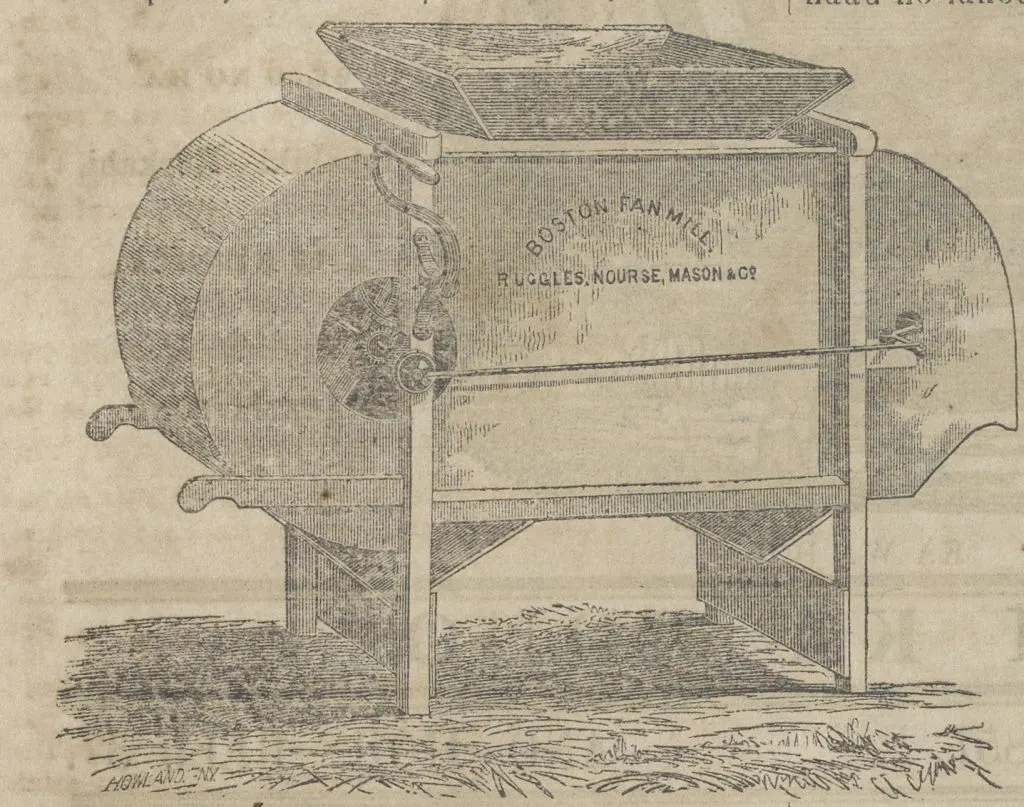
Image: “Ka Huila Peahi Bosetona.” Ka Hae Hawaii, December 9, 1857, p. 106.
Huila Peʻahi Bosetona (Boston Fan Mill)
After harvesting grains like wheat, corn, or oats, the farmer was left with the work of cleaning away the chaff. Although this process could be done using the wind, waiting for a windy day was not practical. This Fan Mill was pricey, but if purchased by a group, each person would have to pay less. Using this mill, two people could clean 30 bushels of wheat in an hour.
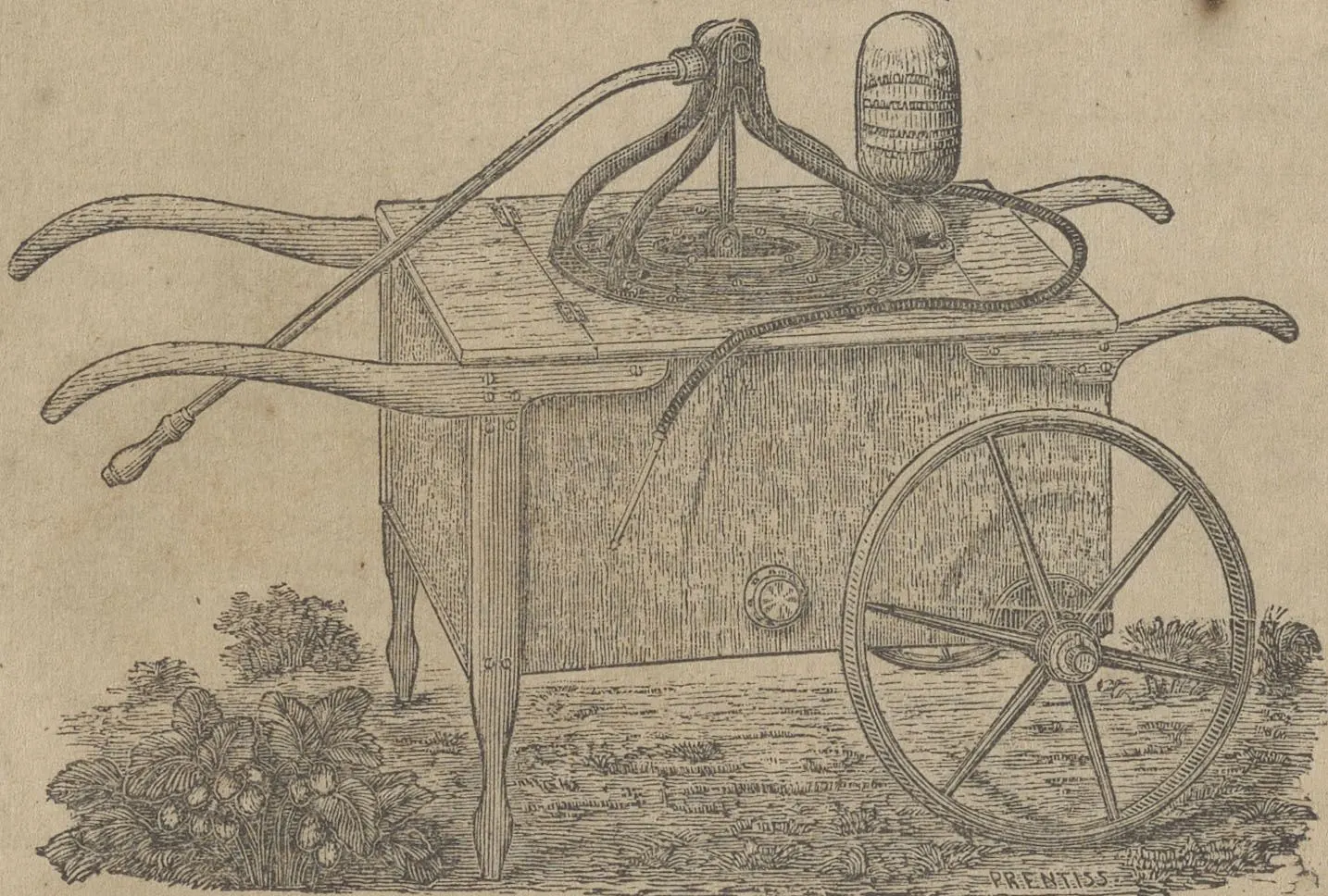
Image: “Mea hoolele wai.” Ka Hae Hawaii, Feberuary 24, 1858, p. 190.
Mea Hoʻolele Wai (Water Truck)
The article speaking of the benefits of this water truck states that it can already be seen in Honolulu. It sprays water this way and that like a fire truck. It is popular in foreign lands like Europe and America. That is why they have fine yards and gardens.
This post is part of He Aupuni Palapala: Preserving and Digitizing the Hawaiian Language Newspapers, a partnership between Bishop Museum and Awaiaulu with assistance from Kamehameha Schools. Mahalo nui loa to Hawaii Tourism Authority for their support. Learn more about this project here.
More from Ka Hae Hawaii
See all →
Hawaiian language columns in English newspapers
English language newspapers often featured a column or two in Hawaiian.

Record the Old Mele
Newspapers were used to record traditions that were fading from memory. As people left the countryside for the excitement of town, their connections to the older generations and the old ways grew farther.

Hawaiian Language Documents, History, and the Judd Family, 1823–1903.
Gerrit Parmele and Laura Fish Judd arrived in Hawaiʻi with the third company of missionaries in 1828. They and their descendants played key roles in Hawaiian history.
Another Issue Not Found—Yet—Online
The description provided in an article on the second page of Ka Hae Hawaii printed on December 31, 1856 talks of a larger format newspaper. What is found online however is just the normal, smaller issue.