
Princess Liliʻuokalani proclaimed regent, 1881
Cover Image: Masthead of Ko Hawaii Pae Aina published on January 22, 1881.
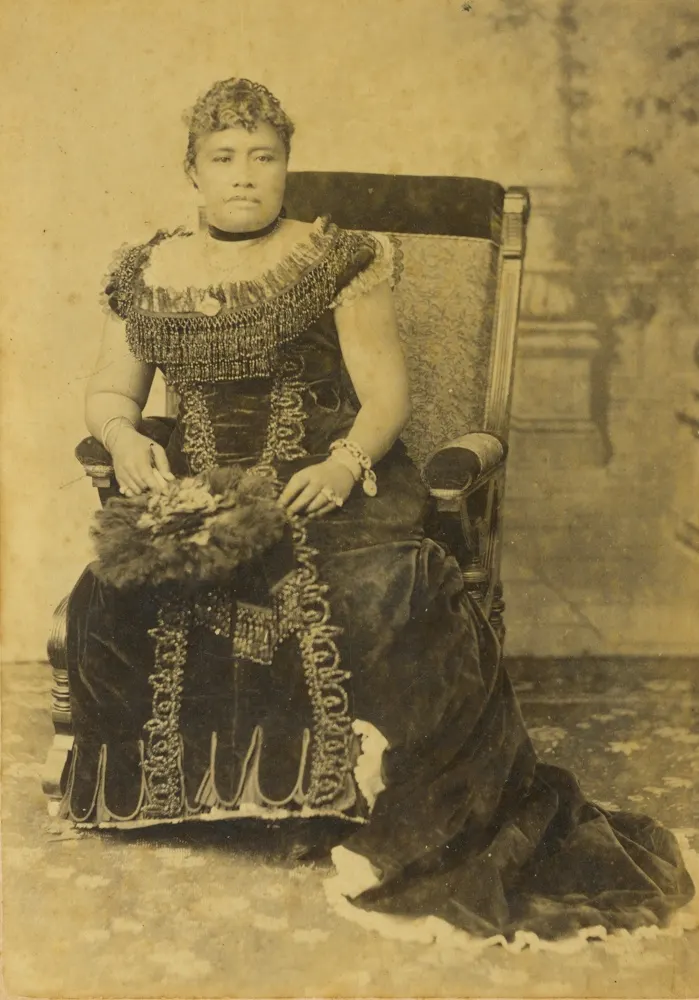
Image: Studio portrait of Princess Liliʻuokalani, Honolulu, Oʻahu, Hawaiʻi. Photo by J. J. Willliams. Bishop Museum Archives, SP 54058
Image sharing on social media is welcome. For all other uses please contact Archives@BishopMuseum.org.
On this day in 1881, King Kalākaua, before leaving on his famous tour around the world, proclaims his sister to be regent during his absence. In Hawaii’s Story by Hawaii’s Queen Liliuokalani, she remarks:
…[Kalakaua] notified me that he expected soon to sail on his trip around the world, and that he desired me to assume the control of the government, and the charge of public affairs as regent, during his absence. He then went on to inform me that he had already held a meeting of the cabinet council on this matter, at which it had been proposed by the members that there should be a council of regency, of which I should be the head; but that the action of the council should be required for the full exercise of authority. This is an important page in Hawaiian history, because it shows how persistently, even at that date, the “missionary party” was at work to undermine at every point the authority of the constitutional rulers of the Hawaiian people. As the king had sent for me with the express purpose of asking my opinion, I gave it in terms too plain to admit of the least misunderstanding between us. I told him that I did not admit either the necessity or the wisdom of any such organization as that of a council of regency. I then proceeded to explain my reasons for this opinion, saying that if there was a council of regency, there would be no need for any regent. In case such a body were to be commissioned to govern the nation, who, then, would be the chief executive? in fact, why was any such individual required at all? To these considerations the king gave careful attention, and appeared to see that my views of the situation were founded upon reason and justice. The result of this informal conference was, that before his departure I was appointed sole regent, with the functions of the reigning sovereign of the Hawaiian Islands during his absence.

Image: “Olelo Kuahaua,” Ko Hawaii Pae Aina, January 22, 1881, p. 2
Image sharing on social media is welcome. For all other uses please contact Archives@BishopMuseum.org.

Image: “Proclamation.” Pacific Commercial Advertiser, January 29, 1881, p. 3 (digitized from microfilm).
Image sharing on social media is welcome. For all other uses please contact Archives@BishopMuseum.org.
This post is part of He Aupuni Palapala: Preserving and Digitizing the Hawaiian Language Newspapers, a partnership between Bishop Museum and Awaiaulu with assistance from Kamehameha Schools. Mahalo nui loa to Hawaii Tourism Authority for their support. Learn more about this project here.
More from Ko Hawaii Pae Aina
See all →
The Kahului train on Maui.
With the passing of the Reciprocity Treaty of 1875, and the subsequent growth of the sugar plantations, an efficient means of transportation was lacking.
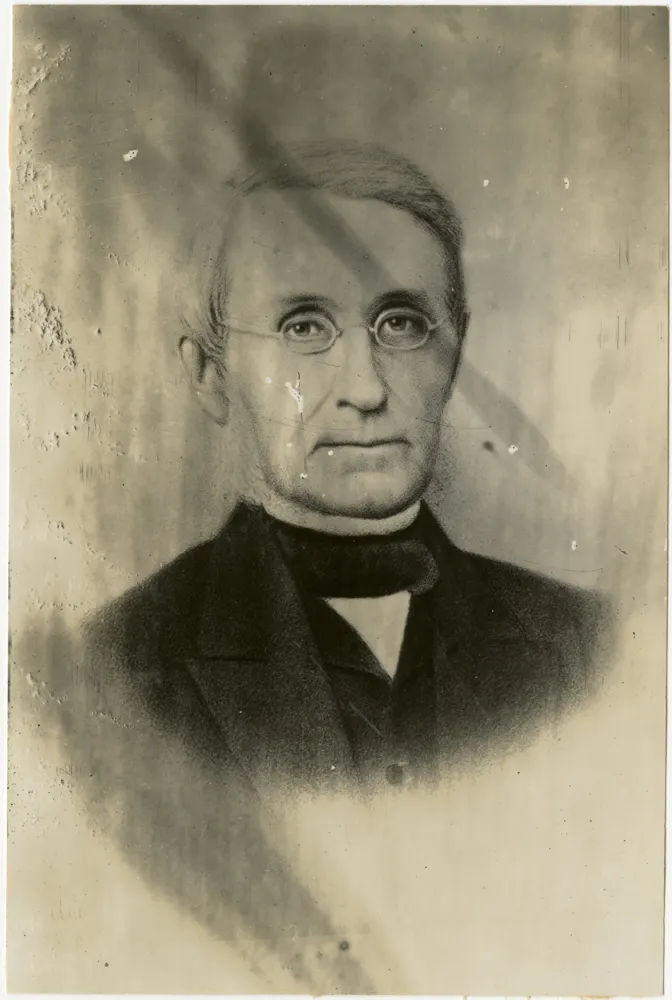
Rev. Ephraim Weston Clark (1799–1878)
Rev. E. W. Kalaka, translator of many books into Hawaiian including A Dictionary of Biblical Words, dies from what appears as heat stroke. It happened not here in Hawaiʻi—but far away in Illinois.

Printing in the Newspapers.
A Kalākaua one-dollar coin could get your mele printed and read across the pae ‘āina and around the world.

Announcements—More than just lost dogs and store sales.
When you think of newspaper announcements, you might think of a reward offered for a lost pet, this week’s store discounts, movies and when they play at the theater in town, or details of an upcoming club meeting. Announcements however were at times emotional displays between man and wife.