
Newspapers Need Subscribers…
Who Actually Pay
Cover Image: Masthead of Hawaii Holomua (Daily) published on January 12, 1893.
Aloha Nūhou Monday!
S. N. Haleole writes an article appearing in the Kuokoa newspaper on January 9, 1864, titled, “Pehea e ola loihi ai ka Nupepa?” [How will the newspaper live a long life?]. He speaks of the important role newspapers play, and that for them to survive, they need money, just like any other business. He then describes in detail the costs of keeping a newspaper alive.
The Hawaiian language newspapers seemed to constantly be trying to get their readers to pay for their subscriptions. The newspapers used various methods, from giving away a portrait of the king if the reader paid their subscriptions off in full at the beginning of the year, to threatening to withhold their newspaper if payment was not made.
This following announcement by the Kuokoa is as blunt as they come.
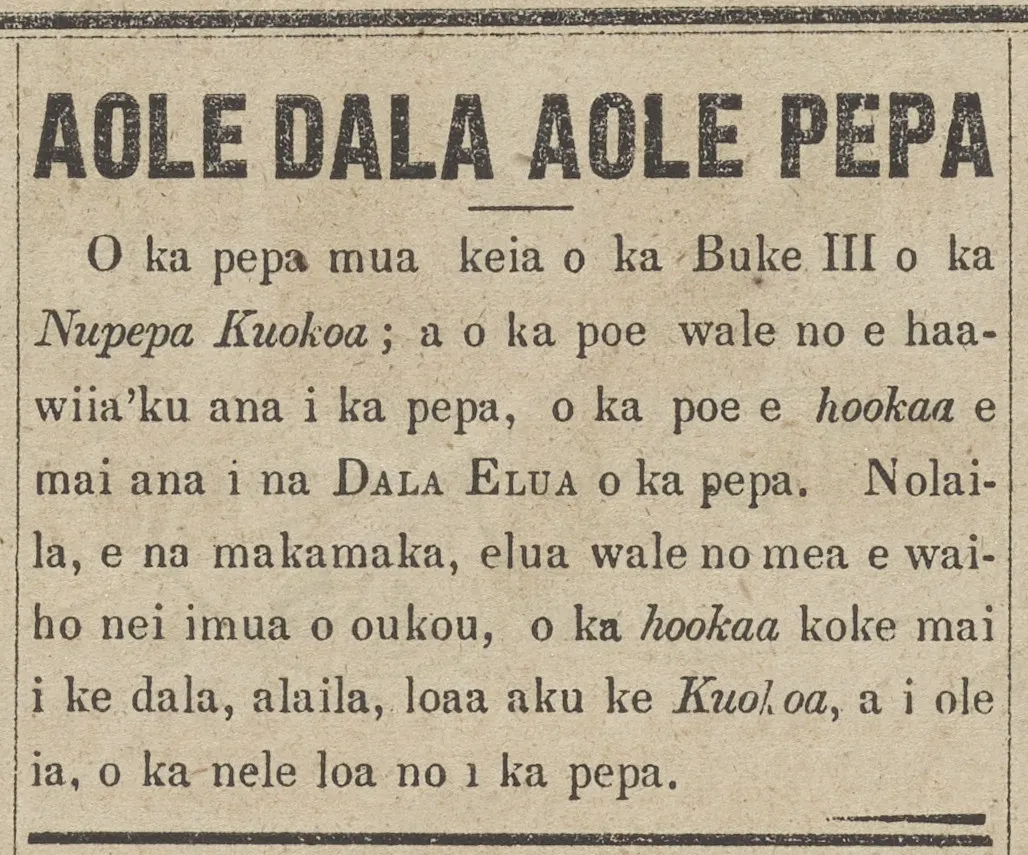
Image: “Aole Dala Aole Pepa” Ka Nupepa Kuokoa, January 2, 1864, p. 2.
NO MONEY, NO PAPER
This is the first paper of Volume III of the Kuokoa newspaper; those who will be given the paper will be those who pay their TWO DOLLARS for the paper. Therefore, O Friends, there are simply two options put before you: pay your money at once and receive the Kuokoa, or be left without.
(Kuokoa, 1/2/1864, p. 2)
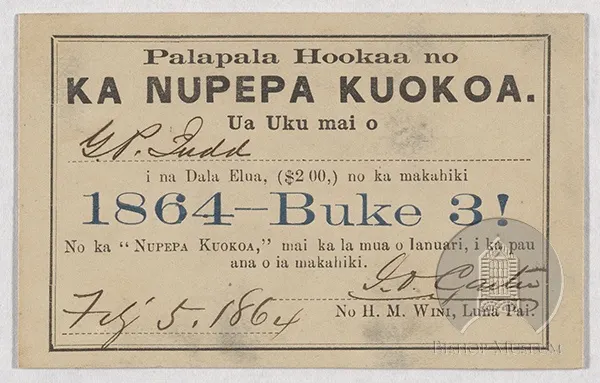
Image: Receipt for Ka Nupepa Kuokoa. G. P. Judd paid $2.00 for the year 1864—Volume 3! For “Nupepa Kuokoa,” from the first of January to the end of the year. [Signed] J. O. Carter [for] H. M. Whitney, Publisher. Feby 5, 1864. Bishop Museum Archives. Judd Family Papers: MS Group 70, Box 33.3.
Image sharing on social media is welcome. For all other uses please contact Archives@BishopMuseum.org
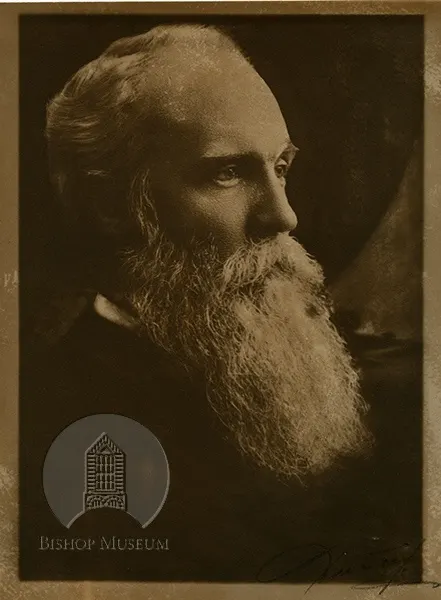
Image: Portrait of Joseph Oliver Carter (12/20/1835–2/27/1909) associate of H. M. Whitney publisher of the Kuokoa. Bishop Museum Archives. SP 127115.
Image sharing on social media is welcome. For all other uses please contact Archives@BishopMuseum.org

Image: “Hele ka Wai Hele ka Ala.” Hawaii Holomua (Daily), January 12, 1893, p. 3.
| The Water Flows and the [Poi] Pounder Works | |
| Those who paid $2 for the Weekly. | |
| Maraea Apai, Mānoa. | 2.00 |
| Naehu, ʻEwa, Oʻahu. | 2.00 |
| A. Kaukau, Waimea Kauaʻi. | 2.00 |
| J. P. Kanuikino. Waimea, Kauaʻi. | 2.00 |
| Wailemi, Honolulu. | 2.00 |
| J. Waiohinu of Paʻauilo, Haw. | 2.00 |
| Sam of Paʻauilo, Hāmākua, Haw. | 2.00 |
| K. Nawai of Paʻauilo, Ham. H. | 2.00 |
| Mrs. Lepeka Roberts, ʻŌʻōkala, Hilo. | 2.00 |
| G. W. Kepa, Waipiʻo, Hawaiʻi. | 2.00 |
| Kaaialii, Kukuihaele, Hawaiʻi. | 2.00 |
| A. W. Haalilio, Waipipiʻo, Haw. | 2.00 |
| Single Payments | |
| S. R. Hapuku, Līhuʻe, Kauaʻi. | 1.00 |
| J. Napapa, Wailau, Mol. | 1.00 |
| Ana, ʻEwa, Oʻahu. | 1.00 |
| P. K. Kamanawa, Honolulu. | 1.00 |
| Sol. Hiram, Honolulu. | 1.00 |
| Kahunahuna, Honolulu. | 1.00 |
| Hattie, Nuʻuanu, Honolulu. | 1.00 |
| John Broad, Kailua, Kona. | 1.00 |
| Mrs. J. K. Anahu, Honolulu. | 1.00 |
| Henry Iliki, Honolulu. | 1.00 |
| Sema Paahao, Pauwela, Maui. | 1.00 |
| W. H. Kaulunahele, Pāʻihiʻihi, Maui. | 1.00 |
| G. W. Kauhane, Puʻuhaoa, Hāna. | 1.00 |
| J. W. Naiapaakai, Kīpahulu. | 1.00 |
| Charles Agon, Kīpahulu. | 1.00 |
| Sam. Kaanaana, Mānoa. | 1.00 |
| J. Kaapuni, Kāwā, Honolulu. | 1.00 |
| J. W. Kalaehao, Honolulu. | 1.00 |
| J. L. Wailiula, Wailau, Mol. | 1.00 |
| Mrs. H. Nawaakolo, Waiheʻe M. | 1.00 |
| S. K. Kahana, Waiheʻe, Maui. | 1.00 |
| Rev. J. Kalino, Waimea, Haw. | 1.00 |
| Mrs. M. Koki of Waimea, Haw. | 1.00 |
| J. Kaia, Kukuihaele, Haw. | 1.00 |
| E. K. Alapai, Laupāhoehoe, Haw. | 1.00 |
| H. H. Kahanamoku, Waipiʻo. | 1.00 |
| Mrs. J. Hassey, Waipiʻo. | 1.00 |
| S. K. Kahanamoku, Waipiʻo. | 1.00 |
| Malaea of ʻŌʻōkala, Hilo. | 1.00 |
| Hon. G. P. Kamauoha of Honopueo, Kohala, Hawaii. | 1.00 |
| (Hawaii Holomua, 1/4/1893, p. 3) | |
This post is part of He Aupuni Palapala: Preserving and Digitizing the Hawaiian Language Newspapers, a partnership between Bishop Museum and Awaiaulu with assistance from Kamehameha Schools. Mahalo nui loa to Hawaii Tourism Authority for their support. Learn more about this project here.
More from Ka Nupepa Kuokoa
See all →
Hohole Samoka!
The Hawaiian language and other Polynesian languages use reduplication, which nuances the meaning of a base word by repeating some part or all of the word. The Hawaiian language newspapers record not only reduplicated indigenous vocabulary, but interestingly, reduplicated loan words as well.
Lahaina Town, 1901
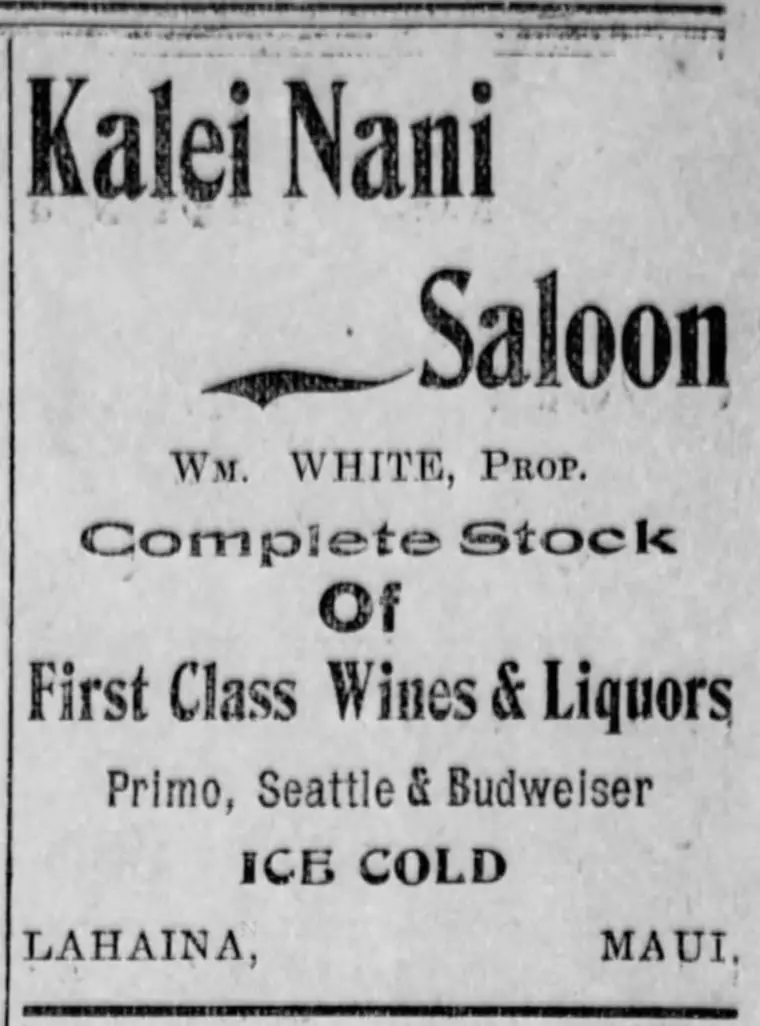
In 1901, a writer from the Lahui Hawaii newspaper describes the improving conditions of Lahaina and compares it to the Lahaina of his youth. We catch a glimpse of the cultural and political landscape of Lahaina in the early 1900s—three saloons, remodeled homes, sweeping fields of sugar cane, government leaders hindering progress, and an unsettled citizen voicing discontent with a call to action. The writer’s message to Lahaina is to elect alternative candidates in order for progress to be made.
Hōʻala Hou ʻia Ana
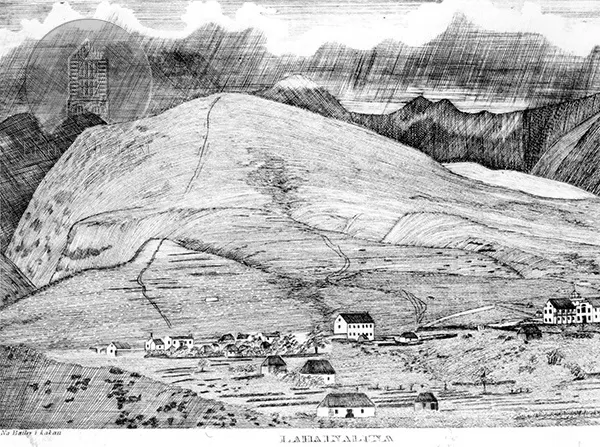
Published on the front page of the August 2, 1862 issue of Ka Nupepa Kuokoa, shortly after the historic fire that claimed the original structure of Lahainaluna Seminary School was a mele kanikau, or song of lamentation. May its words not only bring feelings of familiarity and intimacy to what was lost, but after a period of mourning and healing, may it offer a sense of determination and inspiration to rebuild after this tragedy.
Do Not Underestimate the Coconut Tree.
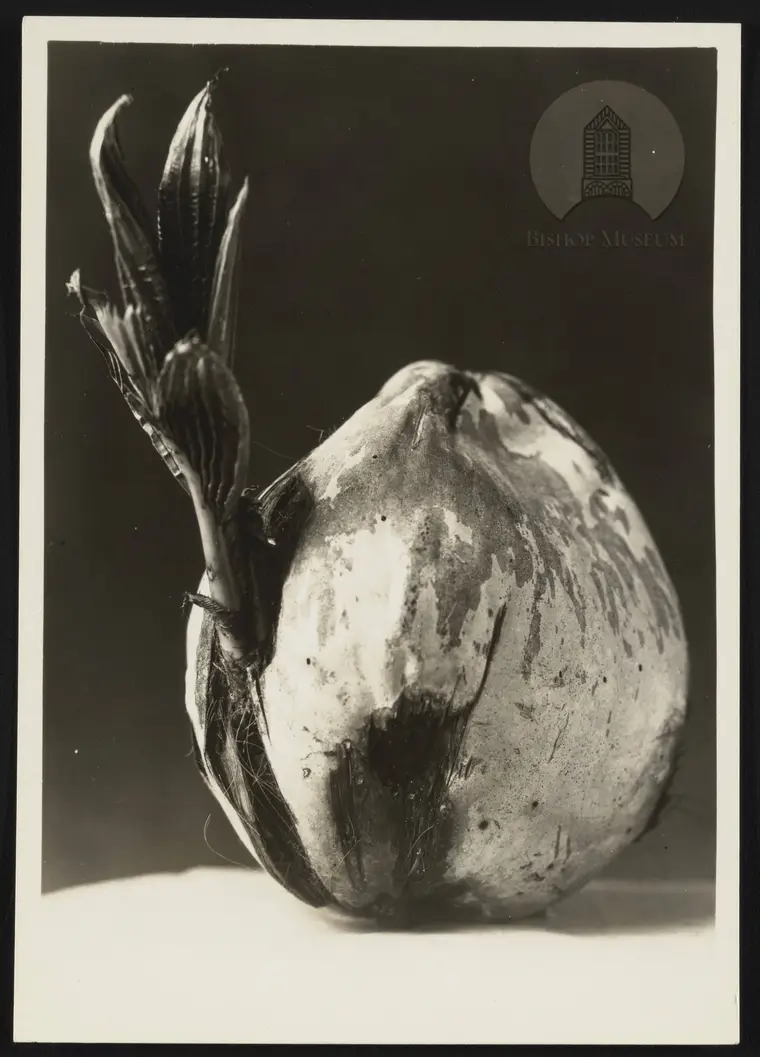
Dear reader, here is yet another example of a call-to-action from the Hawaiian language newspapers that is still relevant today, 157 years later.