
Aliʻiōlani Hale
Cover Image: Masthead of Ko Hawaii Ponoi published on May 6, 1874.
Aloha Nūhou Monday!
Dear Reader,
The lei-draped Kamehameha statue standing before Aliʻiōlani Hale the other week was as usual, an awesome sight to see. But today, we step back over a decade before the dedication of the statue. The ground was broken for the new government building in late 1871.
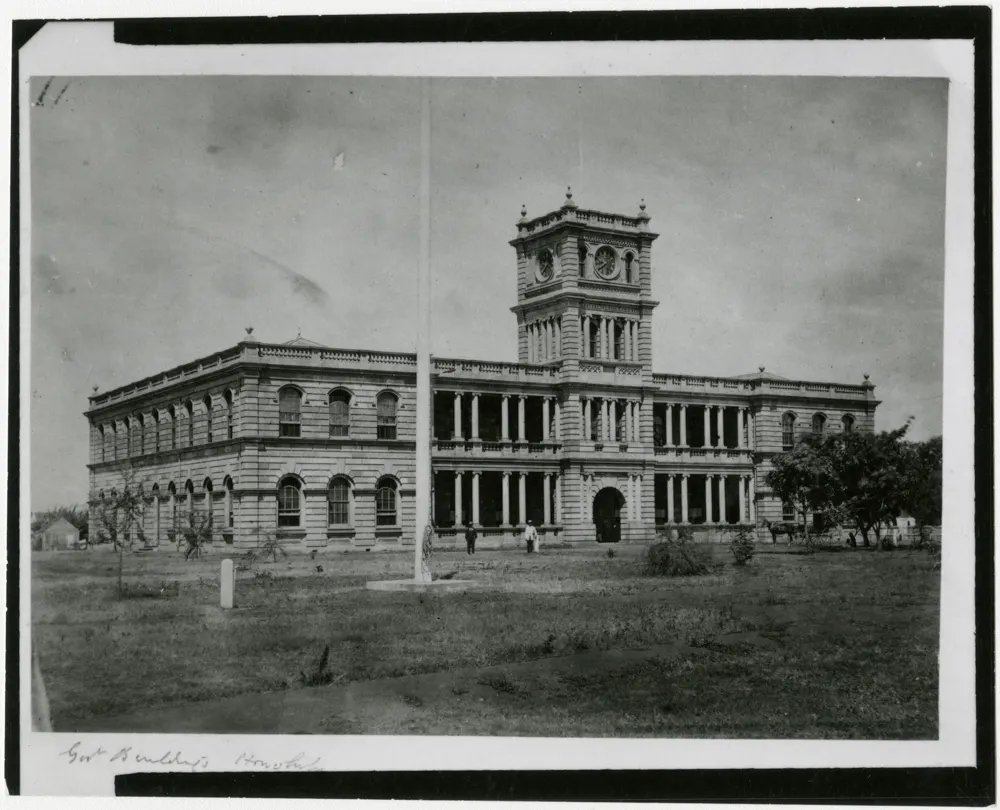
Image: Aliʻiōlani Hale, ca. 1874. Bishop Museum Archives. SP 53571.
Image sharing on social media is welcome. For all other uses please contact Archives@BishopMuseum.org
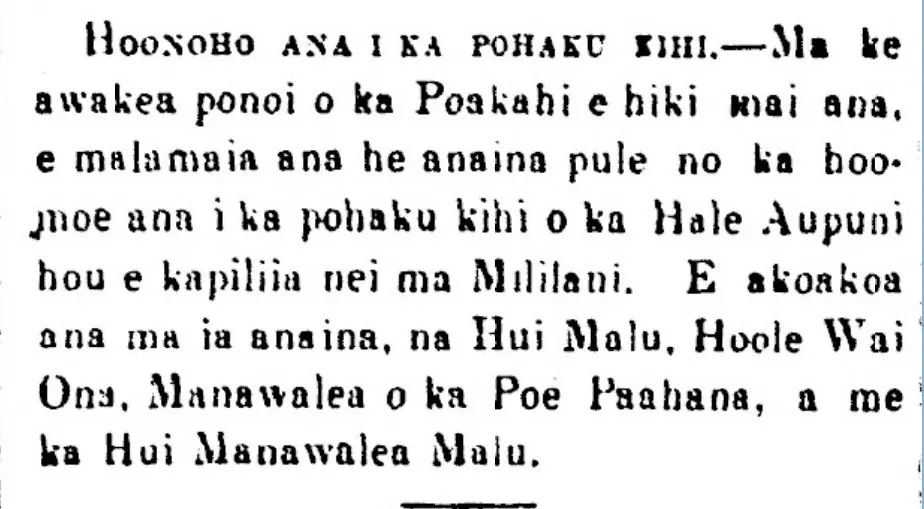
Image: “Hoonoho ana i ka pohaku kihi.” Ka Nupepa Kuokoa, February 17, 1872, p. 2. (Digitized from microfilm.)
Laying of the cornerstone.—At noon this coming Monday, a service will be held for the laying of the cornerstone of the new Government Building being built at Mililani. Gathered together in that assembly will be the secret societies, temperence society, laborers’ benevolent society, and the secret philanthropic society.
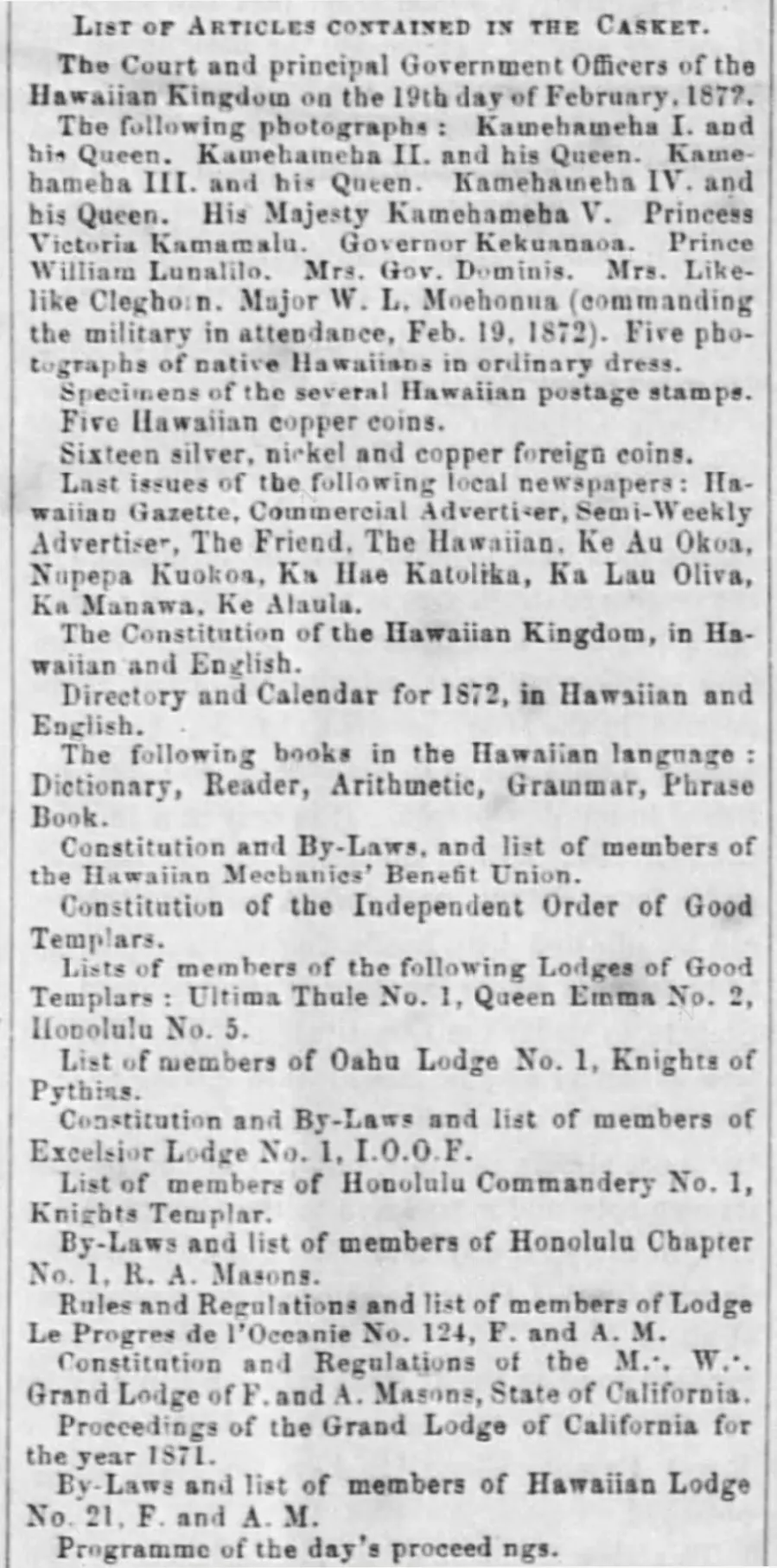
Image: Excerpt from “Laying of the Corner-Stone of the New Government Building.” Hawaiian Gazette, February 12, 1872, p. 2. (Digitized from microfilm.)
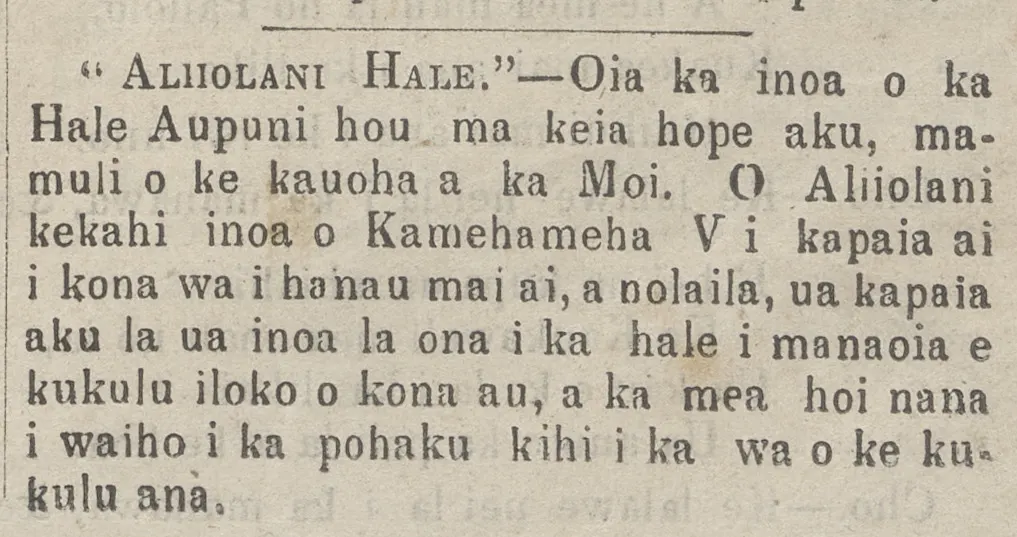
Image: “Aliiolani Hale.” Ko Hawaii Ponoi, May 6, 1874, p. 3
“Aliʻiōlani Hale.”—That is the name of the upcoming new government building, in accordance with the command of the King [Kalākaua]. Aliʻiōlani is one of the names of Kamehameha V by which he was called when he was born, therefore that building intended to be built during his era, will be called by that name of his, of he who placed the cornerstone during its construction.
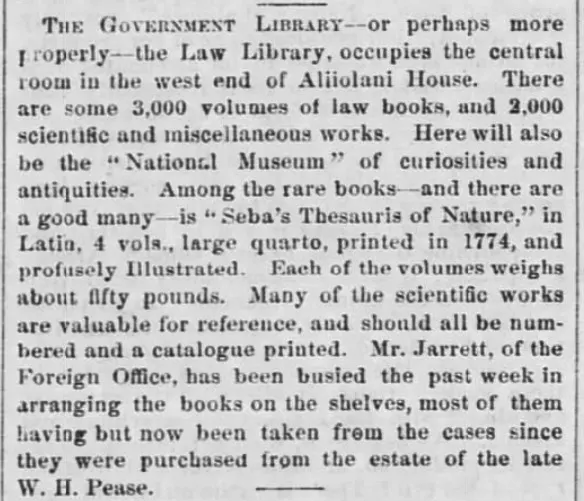
Image: “The Government Library.” Pacific Commercial Advertiser, July 18, 1874, p. 3. (Digitized from microfilm.)
This post is part of He Aupuni Palapala: Preserving and Digitizing the Hawaiian Language Newspapers, a partnership between Bishop Museum and Awaiaulu with assistance from Kamehameha Schools. Mahalo nui loa to Hawaii Tourism Authority for their support. Learn more about this project here.
More from Ka Nupepa Kuokoa
See all →
The Kahului train on Maui.
With the passing of the Reciprocity Treaty of 1875, and the subsequent growth of the sugar plantations, an efficient means of transportation was lacking.
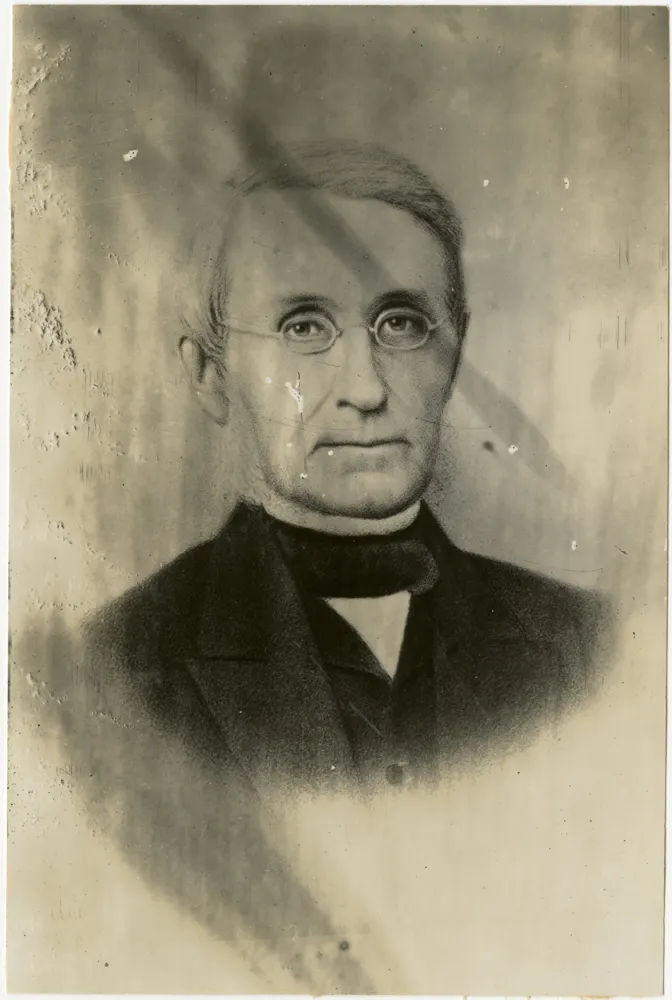
Rev. Ephraim Weston Clark (1799–1878)
Rev. E. W. Kalaka, translator of many books into Hawaiian including A Dictionary of Biblical Words, dies from what appears as heat stroke. It happened not here in Hawaiʻi—but far away in Illinois.
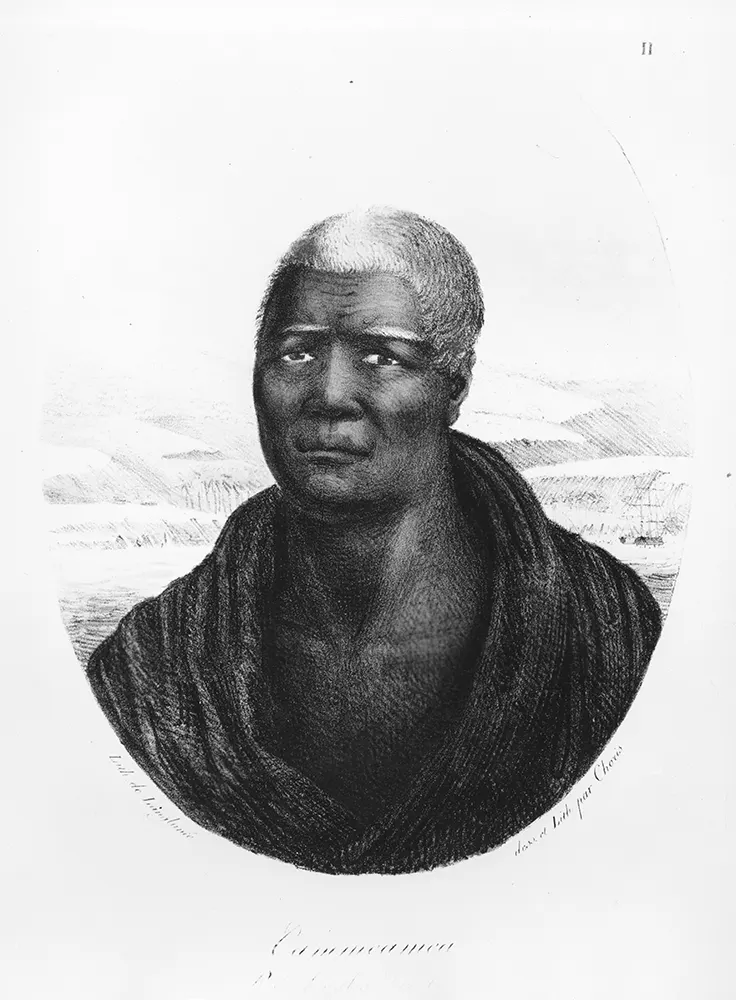
Kamehameha Day, 1875.
There were no parades, but a 21-gun salute and a baseball game were included in the commemoration, 150 years ago, of Kamehameha Day.
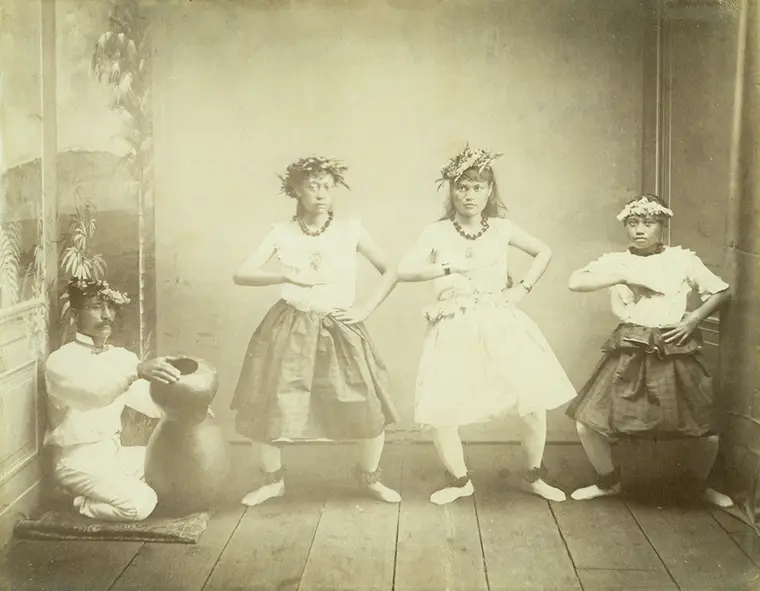
Photographer in the Kingdom: Henry Lyman Chase, “Keiki”
Newspapers are one source not to overlook when sleuthing after the footsteps of those who went before.